
We may earn money or products from the companies mentioned in this post.
You do not want to spend hundreds on a water filter, drill into your kitchen, and discover it does not address the substance you wanted reduced. A pitcher, countertop RO purifier, under-sink system, and whole-house filter solve different problems, and a higher price does not guarantee a better fit.
These seven options are organized around your water concerns, available space, and willingness to maintain the system. Start with the quick comparison, then check the exact filter’s documented claims against your water report or laboratory results.
As an Amazon Associate I earn from qualifying purchases.
Research disclosure: We have not tested these products. This guide compares manufacturer documentation and product listings checked November 2, 2026. The choices are use-case recommendations, not a comparative laboratory ranking. Images are AI-generated illustrations and do not depict our own testing.
Quick answer: choose the type before the brand
For a low-commitment starting point: consider a Brita pitcher with the Elite cartridge if its documented reductions cover your needs. For a specific dissolved contaminant, compare RO systems with evidence for that substance. For chlorine-related taste and odor throughout a city-water home, examine a whole-house option separately from your drinking-water needs.
| Product | Consider it for | Main tradeoff |
|---|---|---|
| Brita Everyday pitcher with Elite filter | Small batches; no plumbing work | Refilling and waiting |
| PUR PLUS FM3700 faucet system | On-demand water at a compatible faucet | Faucet fit and added bulk |
| AquaTru Carafe | Countertop RO without a plumbing connection | Counter space, power and reservoir handling |
| Aquasana Claryum 3-Stage Max Flow | Under-sink filtration without an RO drain stream | Dedicated faucet and scheduled upkeep |
| Waterdrop G3P600 | Tankless under-sink RO | Drain connection and power |
| APEC ROES-PH75 | Tank-based RO with calcium addition | Storage-tank space and multiple filter schedules |
| SpringWell CF1 | Whole-house city-water treatment | Main-line installation; separate targeted treatment may be needed |
Read the individual sections for the limits. No option here should be treated as a universal solution for unknown or microbiologically unsafe water. The EPA’s lead-filter selection guidance also emphasizes verifying certification for the particular reduction claim, rather than relying on a generic certification logo.
1. Brita Everyday pitcher with Elite filter
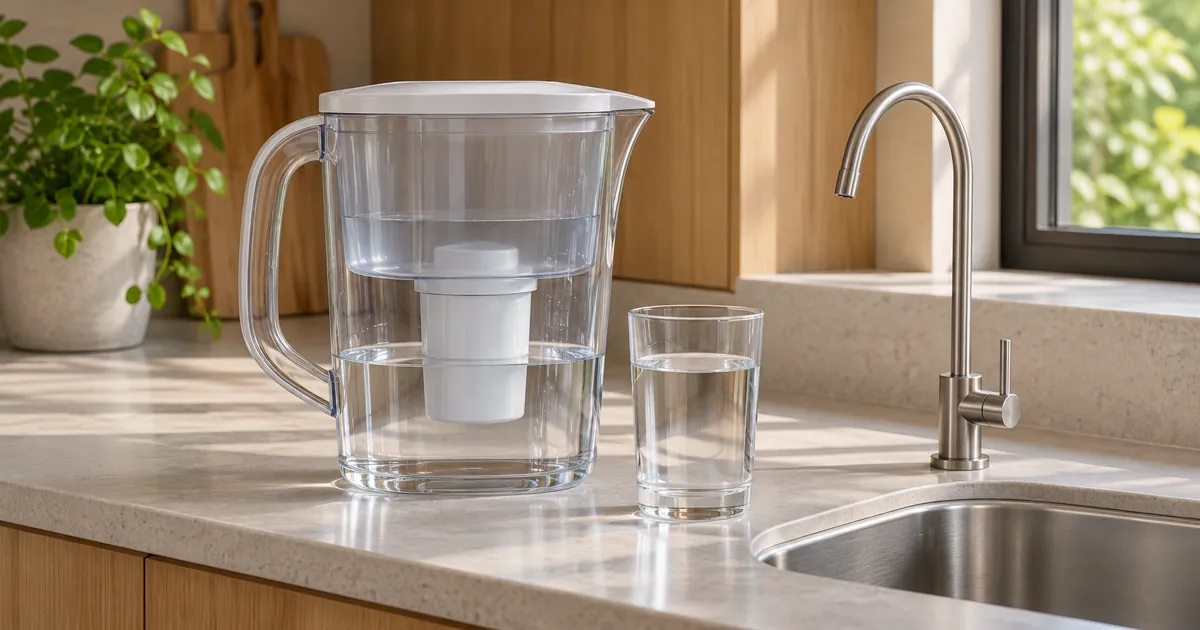
Best fit: a renter or smaller household that wants a simple starting point. A pitcher avoids plumbing work and lets you try a manageable routine before considering a permanent installation. The 10-cup Everyday pitcher with an Elite filter is the specific Amazon package matched for this guide.
Brita rates the Elite cartridge at 120 gallons, or about six months for typical use. Its Elite filter documentation lists lead and chlorine taste-and-odor reduction among the supported claims. Make sure the package includes Elite, rather than assuming every Brita cartridge has the same performance.
The tradeoff is the refill cycle. Think about how often you fill cooking pots or water bottles, not just how many people live in the home. The capacity may be convenient for one household and frustrating for another.
Check before buying: fridge clearance, the included cartridge, and the current replacement-filter price. Hard water can shorten the recommended change interval; the indicator is not a laboratory test of the water.
2. PUR PLUS vertical faucet filtration system
Best fit: filtered water on demand without an under-sink installation. The FM3700-style vertical system attaches at the faucet and switches between filtered and unfiltered water. This can be more convenient than refilling a pitcher if your tap is compatible.
PUR’s official chrome vertical-system listing specifies up to 100 gallons or three months and certification for 70 listed contaminant reductions, including lead. It also states that the device does not filter microbes. Those details concern the genuine filter and specified configuration, not every replacement cartridge sold as compatible.
Check your faucet first. PUR says this system is not designed for pull-out or hand-held faucets. Added bulk at the spout can also interfere with large pots, so consider the way you actually use the sink.
Check before buying: aerator and adapter compatibility, clearance below the spout, and genuine replacement availability. Being portable does not make a faucet attachment suitable for every rental property.
3. AquaTru Carafe countertop reverse osmosis purifier
Best fit: a countertop RO option when plumbing changes are impractical. You fill its reservoir instead of connecting a water line, then collect filtered water in a glass carafe. This is a different ownership routine from turning on a dedicated tap.
The AquaTru Carafe listing describes IAPMO certification to applicable NSF standards for 84 specified reductions. It lists a 0.5-gallon clean-water carafe and requires a 120-volt wall outlet. Match the exact performance sheet to the substance you care about, rather than treating the contaminant count as a guarantee that everything is covered.
Allow space to refill the feed tank, handle the reject water, and clean the components as directed. Countertop RO still involves maintenance and wastewater. The compact design is useful only if you are comfortable with the batch process.
Check before buying: the standard Carafe package versus alkaline or smart variants. They are separate configurations, and Carafe replacement filters are model-specific.
4. Aquasana Claryum 3-Stage Max Flow
Best fit: an under-sink option when its documented reductions match your needs and you do not need RO. The current AQ-6300M uses a sediment prefilter and Claryum filtration, dispensing through a dedicated faucet.
Aquasana lists an 800-gallon or six-month replacement interval and a rated 0.72-gallon-per-minute flow. Its product documentation identifies WQA certification for specified NSF/ANSI 42, 53, and 401 claims. This is not evidence for fluoride or TDS reduction.
It does not have the continuous reject-water stream associated with RO, although flushing still uses water. Retaining dissolved minerals does not make it automatically more effective than an RO system; suitability depends on the treatment goal.
Installation and housing maintenance need attention. Our Aquasana Claryum Max Flow review covers replacement costs, service access, the five-year housing instruction, and the limitations of the available complaint evidence.
Check before buying: the AQ-6300M model, faucet finish, and included parts. The Amazon match here is the brushed-nickel AQ-6300M-BN package.
5. Waterdrop G3P600 tankless reverse osmosis system
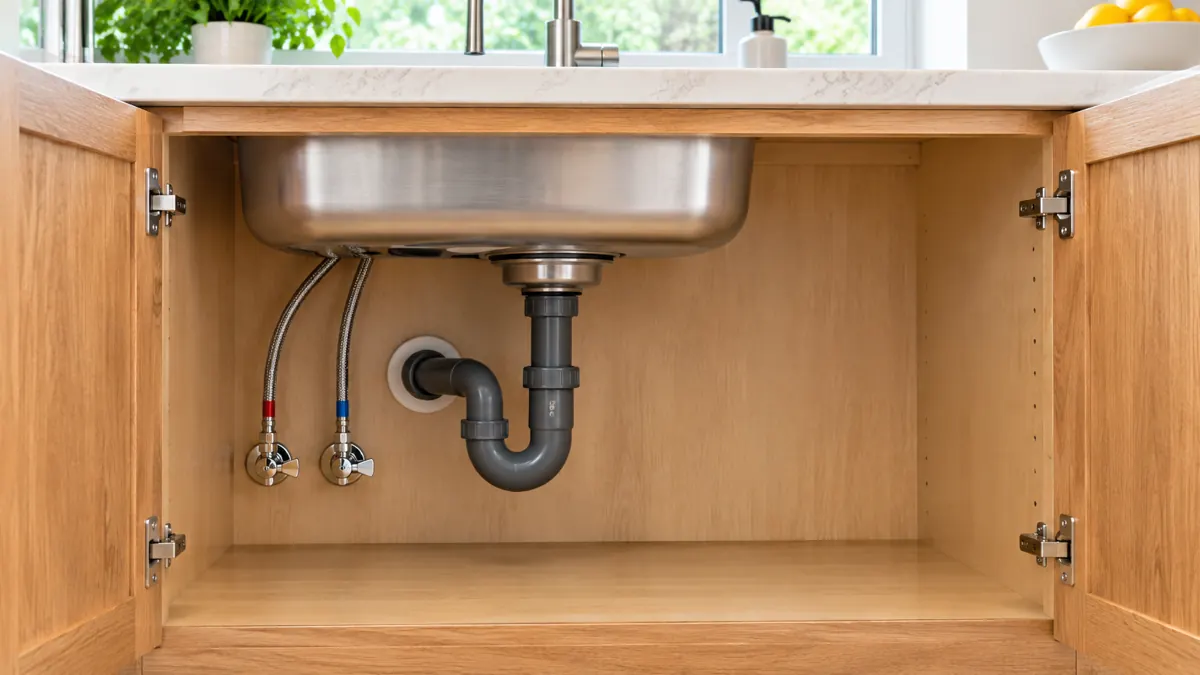
Best fit: an under-sink RO setup where avoiding a storage tank matters. The G3P600 still needs room for its main unit and filter changes, plus a cold-water feed, drain connection, and power supply.
Waterdrop advertises 600 gallons per day and a 2:1 purified-to-drain ratio under stated conditions. These are manufacturer ratings, not our measurements of kitchen flow or household efficiency. Its G3P600 product page provides certification and performance information to check for the exact model.
The displayed TDS value and filter-life information can be convenient, but a TDS display does not identify individual contaminants or prove the absence of lead, microbes, or PFAS. Use the reduction documentation for the substance of concern.
Check before buying: electrical-outlet access, allowed feed-water conditions, and the correct G3P600 replacement schedule. Do not substitute the similarly named G3P800 or G2P600 when comparing price or specifications.
6. APEC ROES-PH75 alkaline reverse osmosis system
Best fit: a conventional tank-based RO layout with a calcium-addition stage. This model has six stages: sediment, two carbon prefilters, an RO membrane, a refining carbon filter, and a final calcium-carbonate stage. The post-carbon filter and calcium-addition filter are separate stages.
APEC’s ROES-PH75 documentation describes its 75-GPD marketed rating, WQA certification, and included tank. Production ratings and usable water available from the tank are different quantities; compare those specifications separately if household demand is high.
Measure space for both the filter assembly and tank. Multiple cartridges also mean more than one replacement interval. A remineralization stage adds selected minerals, not every mineral removed by RO, and does not by itself establish a health advantage.
Check before buying: the exact ROES-PH75 model, feed-water requirements, and its maintenance instructions. Taste preferences vary, so alkaline or remineralized water should not be described as universally better tasting.
7. SpringWell CF1 whole-house water filter
Best fit: city-water treatment before water reaches multiple fixtures. This is a point-of-entry system, unlike the drinking-water products above. A household considering it should assess the main water connection, treatment objective, and installation quote.
SpringWell’s CF product page markets the system for chlorine, chloramine, taste, and odor concerns and provides several size choices. The CF1 is the Core option; confirm sizing and service-flow requirements rather than ordering by household headcount alone.
Manufacturer reduction statements and complete-system certification are separate types of evidence. We are not presenting CF1 as independently certified for every advertised substance. Ask for documentation supporting your specific treatment goal before relying on a claim.
A carbon whole-house system is not automatically a water softener, disinfectant, or treatment for lead that may enter water downstream in household plumbing. It may be paired with targeted drinking-water treatment rather than replacing it.
Check before buying: sediment-filter maintenance, media-replacement terms, and all required installation parts. The link below goes to SpringWell directly and is not an affiliate link.
How to make the decision without overspending

Start with the water, not a product ranking
A utility’s annual water report is a useful starting point, but it does not measure every condition at your kitchen tap. If lead or another specific substance is a concern, use appropriate testing. EPA explains how to find certified laboratories for lead testing. A basic home kit is not a comprehensive test for every possible contaminant.
Write down the substances you want reduced and the evidence each candidate supplies. If the documentation does not address your concern, do not fill that gap with a high review score or a large contaminant count.
Check the daily routine
How many bottles and cooking pots do you fill? Will a reservoir need refilling repeatedly? Can you remove cartridges without moving a tank or emptying the cabinet? An inconvenient system can become an unused system, even when its specifications look good.
Compare one year of ownership
- Purchase price and the exact included faucet, tank, filters, or accessories.
- Installation and any electrical or plumbing work.
- Replacement cartridges at the earlier of their time or gallon limit.
- Membrane, housing, media, and other longer-term service items.
- Reject-water use and electricity where applicable.
Ask for a local installation quote instead of relying on a national hourly estimate. A spare faucet opening, countertop material, drain access, or main-line modification can change the work involved.
For filter-media cost per gallon, divide the replacement cost by the gallons you expect to use before replacement is due. Do not automatically divide by the maximum rated capacity if the calendar limit will arrive first.
Frequently asked questions
Will a water filter remove all contaminants?
No. Check the exact model and cartridge’s documented reductions. Certification to one standard or claim does not establish every other claim, and improving taste is not proof of microbiological safety.
Can a pitcher reduce lead?
Some pitcher-and-cartridge combinations have certified lead-reduction claims. Verify the precise combination using the EPA selection guidance. Do not assume a standard cartridge performs like an Elite cartridge.
Does every reverse osmosis system need electricity?
No. Powered countertop and tankless models are common, but RO technology does not universally require an electrical connection. Follow the installation requirements for the particular system.
How often do filters need replacing?
Use the earlier of the manufacturer’s time or volume limit, and follow any additional instructions for your water conditions. Different cartridges within one RO system can have different schedules.
What is the best filter for well water?
That depends on the well’s test results. Get appropriate testing and treatment advice rather than assuming a municipal-water carbon filter, pitcher, or generic RO label addresses every well-water problem. Disinfection, sediment, hardness, and dissolved substances can require different approaches.
Is the most expensive filter the best choice?
Only if its capabilities and ownership requirements match your needs better. A manageable pitcher may fit a small household’s documented treatment goal; another household may need a specific RO reduction claim. A whole-house system addresses a different scope.
Final recommendation
If your needs are covered by an Elite cartridge and you want to avoid installation, the Brita pitcher is a practical option to compare first. If your water requires a different treatment approach, skip that starting point and match the system to the evidence.
For an installed non-RO option, read our full Aquasana Claryum 3-Stage Max Flow review. For the broader buying decision, keep your water results, available space, and yearly costs together while comparing the exact packages.
Prices, packages, and availability can change. Confirm the selected model and contents on the retailer’s page before buying. Our editorial policy and About page explain the basis and limitations of our research.
1 thought on “7 Best Water Filters for Home in 2026: Which Type Do You Need?”