
We may earn money or products from the companies mentioned in this post.
The Aquasana Claryum 3-Stage Max Flow belongs on your shortlist if you want an under-sink filter with documented lead, chlorine, and PFOA/PFOS reduction without choosing a reverse osmosis system. Before buying, compare the exact package, ongoing filter costs, and housing-maintenance requirements.
This review looks at what ownership involves, where the system has limitations, and what the available leak-investigation source actually says.
Quick verdict
A conditional fit: consider it if its documented reductions match your water concerns and you can accommodate a dedicated faucet and scheduled upkeep. Look elsewhere if fluoride or dissolved-solids reduction is your main requirement. Budget roughly $156 to $184 annually for two replacement sets at the prices checked, before other ownership costs.
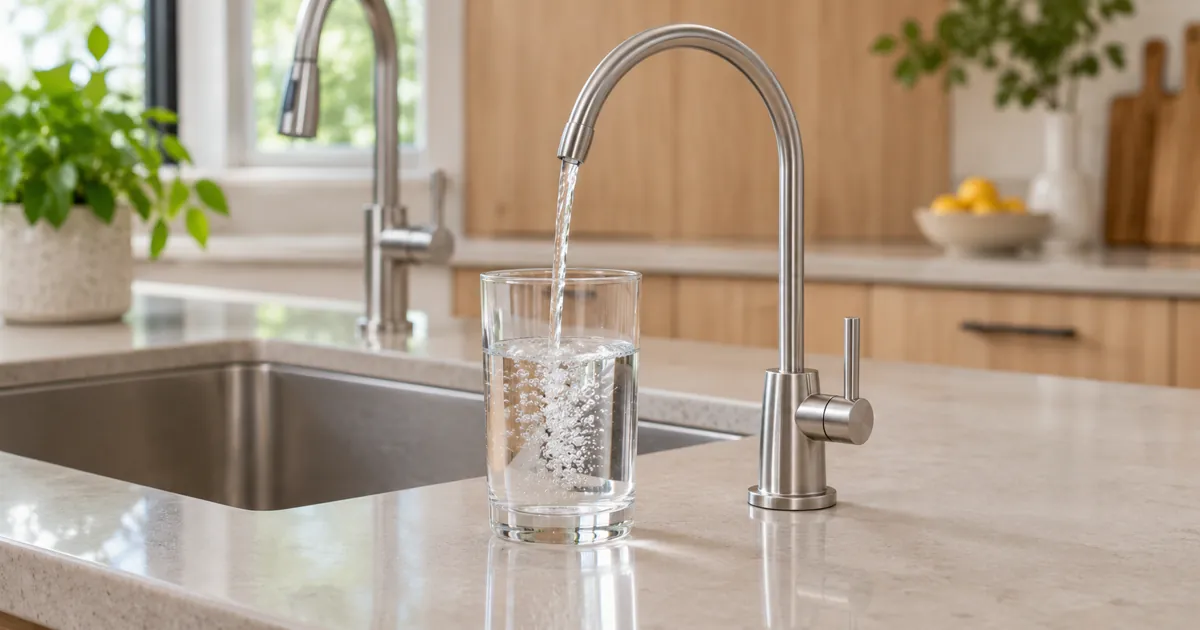
Research disclosure: We have not installed or tested this system. Images are AI-generated editorial illustrations, not photographs of our testing or an Aquasana installation. This is a document-based review, checked November 2, 2026. Our editorial policy explains how we distinguish source claims from our assessment.
What the Claryum 3-Stage Max Flow is
The current model reviewed here is AQ-6300M. Aquasana describes a 5-micron sediment prefilter followed by two Claryum filters. Faucet-inclusive and no-faucet packages are offered, so check the selected variant rather than comparing headline prices alone.
The official product listing gives dimensions of 4.25 × 12 × 12.85 inches. Treat those as the system footprint, then allow additional access space for servicing.
The replacement listing supports both AQ-5300+ and AQ-6300M systems. Shared replacement compatibility does not establish that every housing, installation detail, or performance claim is identical across generations. Match your model to its own manual.
Performance: what the documentation supports
The AQ-6300M performance data sheet identifies WQA certification to NSF/ANSI 42, 53, and 401 for the specified claims. It reports these laboratory results:
| Item | Documented result |
|---|---|
| Rated flow | 0.72 gallons per minute |
| Rated capacity | 800 gallons |
| Chlorine reduction | 97.3% |
| Lead reduction | 99.6% at pH 8.5; greater than 99.7% at pH 6.5 |
| PFOA/PFOS reduction | 99.7% |
| Microplastics reduction | 99.6% for tested 0.5 to less than 1-micron particles |
These are results under specified test conditions, not our measurements or a promise for every household. PFOA/PFOS results should not be generalized to every PFAS chemical. The sheet also says the system does not remove every contaminant that may be present in tap water.
Fluoride, arsenic, and total dissolved solids are not reduction claims established by the AQ-6300M sheet reviewed. If one is your priority, look for a system with evidence for that specific substance. A lower TDS reading by itself is not a complete assessment of water quality.
Real costs: compare the package and the upkeep

Prices below are in US dollars and reflect the pages checked on November 2, 2026. The system price is specifically for the no-faucet AQ-6300M-NF listing, not a brushed-nickel faucet bundle.
| Cost item | Price checked | What to verify |
|---|---|---|
| No-faucet system | $399.99 regular; $319.99 Water for Life price displayed | Package contents and checkout conditions |
| AQ-C3M-R replacement set | $91.99 regular | Correct model compatibility |
| Replacement set with Water for Life | $78.19 displayed | Subscription and shipping terms |
| Two replacement sets annually | $183.98 regular or $156.38 subscription | Assumes two sets; excludes other costs |
Sources: system package listing and replacement-filter listing. Compare the final basket price, including the faucet if needed, tax, delivery, and installation. Promotions can change.
Cost per gallon needs context. Dividing $78.19 by the full 800-gallon rating gives about $0.098 per gallon for replacement media alone. At $91.99, it is about $0.115. Neither figure includes the system purchase or installation.
The calendar limit can matter more than capacity. For example, a household using two filtered gallons daily would use about 365 gallons in six months. A $78.19 replacement at that interval works out to approximately $0.21 per actual gallon, rather than $0.10. This is an illustrative calculation, not a consumption forecast.
For your own estimate, divide the replacement price by the gallons you expect to use before the next required change. Add any installation, faucet, and housing-replacement costs separately. A low advertised cost per gallon is useful only when its assumptions resemble your household.
Filter changes: the details the draft needs to get right
Aquasana rates the replacement set for six months or 800 gallons, whichever comes first. The replacement instructions describe more than simply dropping a new filter into place:
- Shut off the cold-water supply and release pressure through the dedicated faucet.
- Detach the housings, open them, and inspect the O-rings. Replace damaged seals rather than forcing the assembly.
- Fit the correct color-coded cartridges and hand-tighten the housings as directed.
- Reattach the housings correctly, slowly restore water, check for leaks, and flush for 10 minutes before drinking.
The instructions say systems purchased before 2024 may not produce the same locking click. Avoid treating the absence of a click as proof of a fault on every version. Follow the instructions for the system you own.
If flow stops after a change, check the manual’s troubleshooting guidance or contact support. This review cannot establish how often installation errors explain low flow, and it should not dismiss every no-flow complaint as user error.
Installation and cabinet space
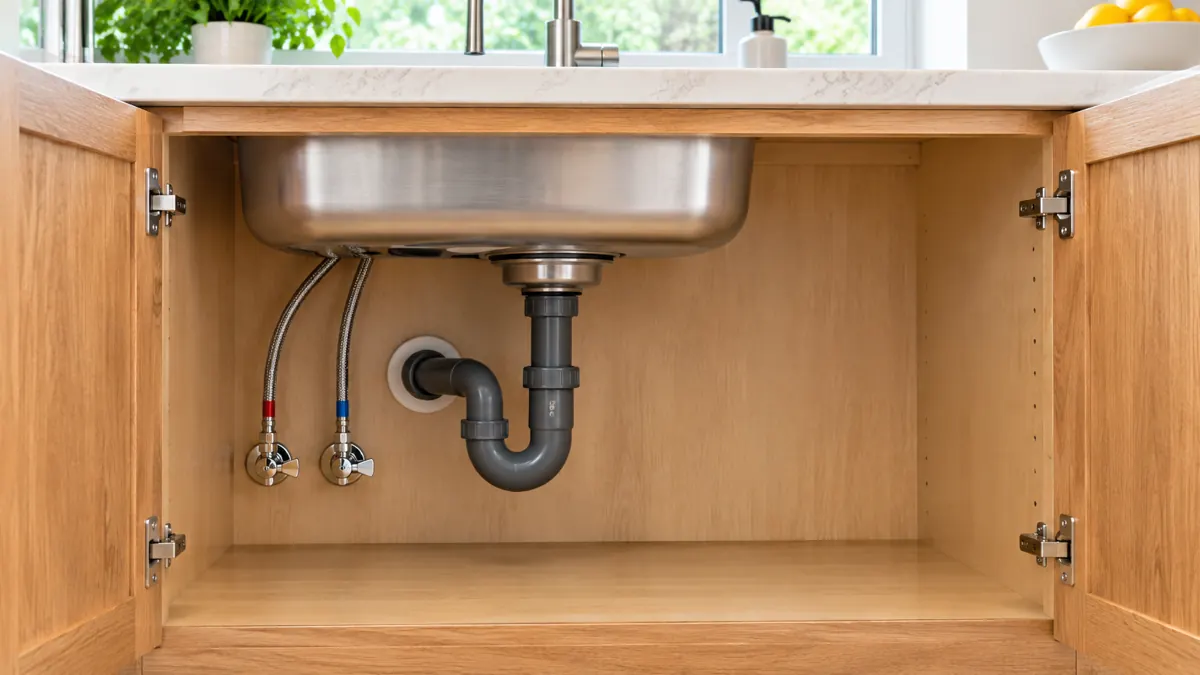
A compatible drinking-water faucet needs a suitable mounting point. Before ordering, identify whether you can reuse an existing opening and confirm any restrictions on modifying a rented property. Do not budget for drilling until you know the sink or counter material and the required fitting.
The current owner’s manual specifies cold-water use at 20 to 80 psi and 40 to 90°F. It calls for at least 12 inches from the cabinet bottom when positioning the manifold for service access. It also requires protection from freezing and direct sunlight.
The manual warns against use with microbiologically unsafe or unknown-quality water without adequate disinfection. This is not a stand-alone solution for making an unknown campground or well supply safe.
Assess the space with the cabinet in everyday use. Can you reach the shutoff valve, remove housings, and spot moisture without emptying the entire cabinet? If access is awkward, that inconvenience will return at every service interval. Obtain an installation quote if the work is outside your skills.
Leak complaints and the investigation: separate the evidence
The ClassAction.org page about Claryum filter leaks is marked Investigation Complete, last updated February 4, 2026. It says the attorneys finished their investigation and that the older material remains for reference. Describing this source as an active investigation would be inaccurate.
The archived material concerns allegations of leaking or cracked Claryum housings and possible property damage. That page alone does not establish a defect finding, a failure rate for AQ-6300M, or a current certified class action. We have not verified the draft’s specific October 2026 complaint dates, so they are not repeated here.
For ownership planning, the manufacturer documentation supplies a more concrete requirement: the manual says to replace housings every five years because of leak-related property-damage risk. That is separate from the six-month cartridge schedule.
Keep records of cartridge and housing changes, retain purchase documentation, and inspect connections after servicing. A water alarm may help alert you to moisture, but it does not prevent a leak or replace proper installation. If leak risk near valuable finishes is a deciding concern, discuss the installation and protection options with a qualified plumber.
Pros and cons
Reasons to consider it
- Documented reductions for specific contaminants, rather than relying only on a taste claim.
- A non-RO option for buyers who do not need dissolved-solids reduction.
- Published replacement documentation and clearly identifiable replacement sets.
Reasons to compare alternatives
- Recurring cartridge costs can exceed a full-capacity cost-per-gallon estimate at lower usage.
- Faucet installation, service access, and housing replacement need planning.
- The available complaint material does not establish model-specific reliability; uncertainty remains.
- It lacks documented fluoride, arsenic, and TDS reduction in the performance sheet reviewed.
How to compare the alternatives
Choose the treatment goal first, then compare formats. A more expensive system is not automatically more appropriate, and a long contaminant list is useful only when it covers the substances you need addressed.
| Option | Worth comparing when | Check before buying |
|---|---|---|
| Claryum Max Flow | Its listed reductions match your needs | Variant, service access, recurring costs |
| Reverse osmosis system | You need a documented fluoride or TDS-reduction claim | Exact certifications, installation, tank or power needs, wastewater |
| Countertop or pitcher filter | Permanent plumbing changes are impractical | Specific reduction evidence, capacity, refill effort |
| Direct-connect under-sink filter | You want to use your existing faucet | Rated flow, treatment claims, compatibility |
Ask the same questions of every candidate: What evidence supports the reduction I need? What does a year of replacements cost at my usage? What changes to the kitchen are required? This gives you a more useful comparison than ranking systems on purchase price alone.
Warranty and returns
The system limited-warranty document provides a 12-month term and excludes filter cartridges. It contains installation and maintenance conditions, labor-related limitations, and water-damage exclusions, subject to applicable law. Do not assume the system warranty pays for every consequence of a leak.
For direct purchases, Aquasana’s returns policy provides a 90-calendar-day return window starting on the order date, requires authorization, and makes the customer responsible for return shipping and insurance. Authorized returns must be received within 21 days of the authorization code being generated. Other retailers can have different terms.
Frequently asked questions
Is the Aquasana Claryum 3-Stage Max Flow worth it?
It may be, if its documented reductions match your water concerns and you accept the ongoing service requirements. Compare actual annual costs and installation needs before deciding. This is a research-based assessment, not a test verdict.
Does it reduce PFAS?
The AQ-6300M sheet reports reduction of PFOA and PFOS under specified conditions. That evidence does not justify claiming removal of every PFAS compound.
Are AQ-5300+ and AQ-6300M identical?
The current replacement listing supports both, but shared cartridges do not prove identical housings or performance documentation. Check the model number and matching manual.
What if I mainly want fluoride reduction?
The AQ-6300M sheet reviewed does not establish that claim. Compare alternatives with documented fluoride reduction rather than assuming any under-sink filter will provide it.
Is the leak investigation still active?
The cited ClassAction.org page is marked complete. Historical allegations remain relevant to a buyer’s questions, but should not be presented as an active investigation or a court finding.
Final verdict
The Claryum 3-Stage Max Flow is a reasonable system to compare when its documented contaminant reductions meet your needs. The decision becomes less attractive if you need a different treatment goal, cannot accommodate the installation, or want to avoid the upkeep described here.
Before purchasing, confirm the exact Aquasana package and current price, read the maintenance instructions, and calculate replacement costs using your likely water consumption. If you are still narrowing down your needs, start with the approach described on our home water-filtration overview.
For the limits of our experience, see About Water Filter Compass.
Compare other home water filters
Still deciding between a pitcher, countertop purifier, under-sink system, or whole-house setup? Our seven home water filters comparison explains the different installation and maintenance tradeoffs.
1 thought on “Aquasana Claryum 3-Stage Max Flow Review: Cost & Worth It?”